Are you dreaming of live music, tech vibes, tasty tacos, and endless sunshine? Then Austin, Texas, is the place for you.
Austin, Texas, ranks among the fastest-growing cities in the United States, famous for its quirky charm, thriving job scene, and a unique blend of culture and nature. Whether you’re a creative, coder, foodie, or just looking for a new beginning, Austin provides many reasons to move there.
But as with many big moves, it’s essential to look at the whole picture. While there are tons of perks to planting roots in the capital of Texas, there are also challenges you’ll want to be ready for, like summer heat, traffic, and lack of diversity.
So, before you pack and ship your moving boxes, let’s look at the advantages and disadvantages of moving to Austin to help you decide if this lively Texas capital is the right choice for your next big adventure.
5 Interesting Facts about Austin, Texas
Numerous defining features of Austin make it a good place to live. It’s not just the job market or the sunshine. Austin has a personality of its own, and if you’re planning a move to this city, you’re in for a wild and wonderful ride.
1. “Keep Austin Weird!” – The Motto Austin Lives By

Austin is a place where creativity, individuality, and a love for the outdoors come together. People here are relaxed yet driven, artsy yet tech-smart, and they genuinely enjoy their local coffee shops, live music, and weekend hikes. The city’s unofficial motto is “Keep Austin Weird,” and residents proudly support it. Austin has a unique energy that you won’t find anywhere else in Texas, or maybe even in the whole country.
2. The “Live Music Capital of the World”
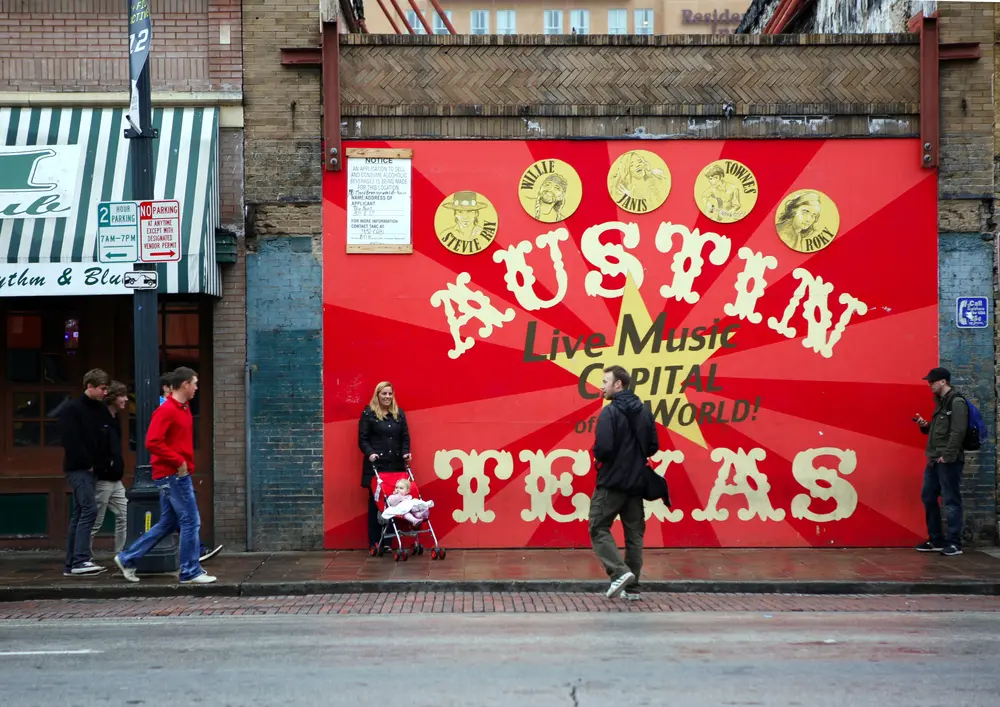
Austin earned its famous title, “Live Music Capital of the World,” for good reason. You can catch live performances almost any night of the week, from packed concert halls to tiny bars with immense talent. Whether you’re into indie rock, country, blues, or EDM, there’s something here for every music lover.
3. Notable Events and Festivals

One of the most significant events is South by Southwest (SXSW). This massive annual event draws creatives, entrepreneurs, musicians, and fans from around the globe. Additionally, Austin City Limits (ACL) is a music festival that brings some of the biggest names in the industry to Zilker Park every fall.
4. Tech Talents Refer To It As “Silicon Hills”
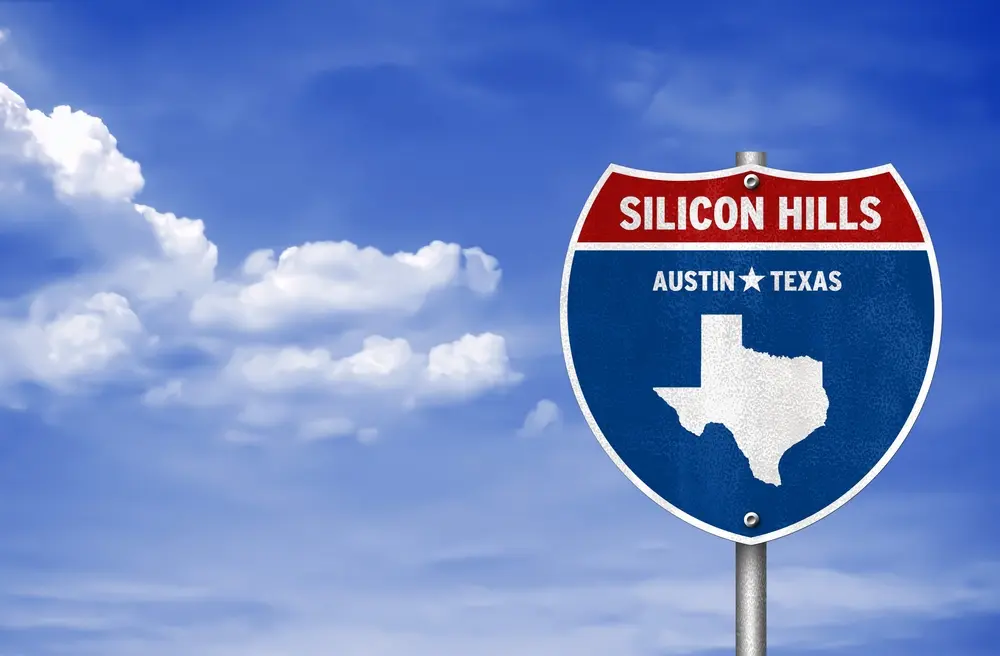
Austin isn’t just incredible, it’s smart too. The city is a growing tech hub, earning the nickname “Silicon Hills,” thanks to the number of tech giants and startups setting up shop here. Companies like Apple, Google, Tesla, and Meta have made significant moves in Austin, creating tons of new job opportunities in the process.
5. Unique Culinary Scene and Popular Food Trucks
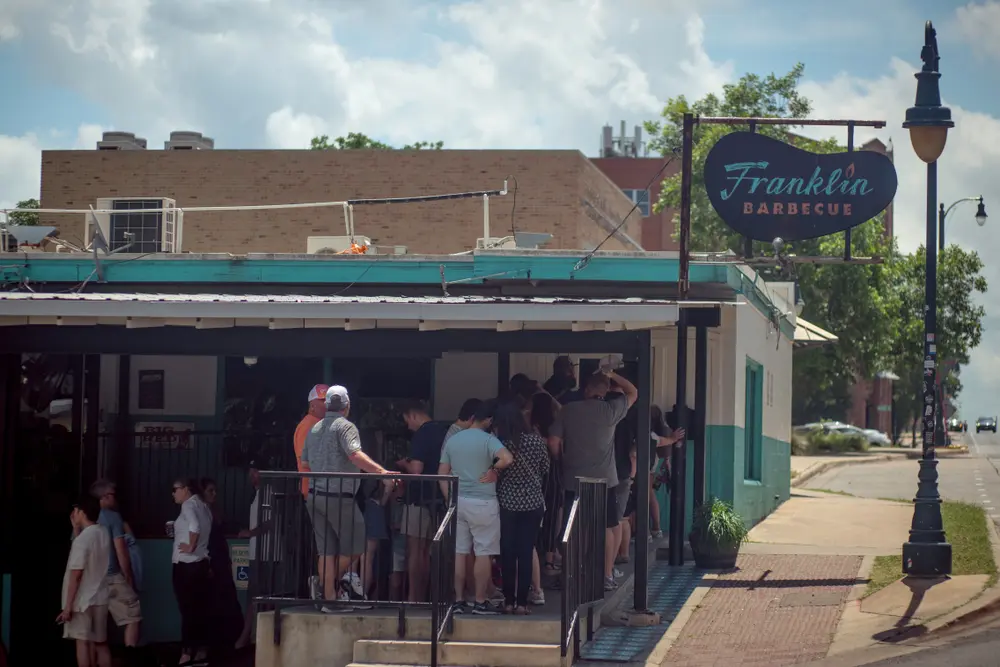
Skip bland fast food. Austin is all about food trucks, fusion dishes, and legendary barbecue. From mouthwatering brisket at Franklin Barbecue to breakfast tacos you’ll dream of forever, Austin’s food scene is diverse, creative, and seriously tasty. Don’t be surprised if eating becomes one of your favorite hobbies after moving here.
Advantages and Disadvantages of Moving to Austin, Texas
Austin has become one of the most talked-about cities in the U.S. It’s a place where creativity thrives, jobs are booming, tacos are a way of life, and there’s always live music playing somewhere in the background.
Whether you’ve visited before and fallen for the vibe, or you’re just starting to explore options for a fresh start, Austin has a lot to offer. But like any city, it’s not all sunshine and brisket.
Moving to a new city is a big decision. You need to create a realistic budget to cover your moving costs and relocation expenses.
Is Austin the proper city to call home?
Yes and no. Once you’ve seen the pros and cons of moving to Austin, you’ll have a much clearer picture of whether this fast-growing Texas hotspot is the right place for you to call home. And if you do decide to make the move, choosing the right moving company can make settling in a whole lot easier.
| Advantages | Disadvantages |
|---|---|
| Thriving Job Market and Economic Opportunities | Rising Cost of Living and Expensive Housing |
| Vibrant Cultural Scene and Recreational Activities | Heavy Traffic and Poor Transit Options |
| Mild Climate and Outdoor Lifestyle | Hot Summers and Unpredictable Weather |
| Diverse and Welcoming Community | Rapid Population Growth and Overcrowding |
| No State Income Tax | High Crime Rates |
Advantages of Moving to Austin, Texas
Let’s start with the good stuff, because Austin has its perks. From job opportunities to vibrant culture and everything in between, here’s why so many people are packing their valuables and heading to the Texas capital.
1. Thriving Job Market and Economic Opportunities
Known as “Silicon Hills,” Austin has rapidly become a magnet for top-tier talent and companies alike, as it was ranked as the second hottest job market in the country. From established tech giants to fast-moving startups, the city offers abundant career opportunities across multiple industries.
The unemployment rate in Texas is at 4.1 percent, which is 0.1 percentage points below the national rate.
Some of the major employers with a significant presence in Austin are Google, Apple, Tesla, Oracle, and Dell.
In health care and education, Seton Healthcare Family, St. David’s, and the University of Texas at Austin are major contributors to local employment.
Austin offers a dynamic landscape for professionals, entrepreneurs, and job seekers alike.
Whether you’re looking to climb the corporate ladder or build your dream startup, Austin gives you room to grow.
2. Vibrant Cultural Scene and Recreational Activities
If music and creativity fuel your soul, Austin won’t disappoint.
This city is famously dubbed the “Live Music Capital of the World,” and with over 250 venues across town, there’s always a rhythm in the air, be it country, blues, indie, or something experimental.
Some of the iconic venues here are the Continental Club, Antone’s, and Mohawk Austin. The signature festivals of this city include SXSW, Austin City Limits (ACL), and the Pecan Street Festival. If you’re into arts and culture, some popular museums are the Blanton Museum of Art and The Contemporary Austin.
Beyond music, Austin’s cultural offerings include a thriving theater scene, indie cinemas, local galleries, and a vibrant street art culture. The city thrives on creativity, so inspiration is always around the corner.
3. Mild Climate and Outdoor Lifestyle
Austin enjoys sunshine for most of the year, averaging 228 days.
The city’s warm and temperate climate makes it easy to stay active outdoors year-round.
Spring and fall are delightful, and while summers can be hot, the many shady parks, cool swimming spots, and nearby lakes provide plenty of ways to stay cool.
You can explore outdoor attractions like Zilker Park, Barton Springs Pool, and Lady Bird Lake. Try hiking and biking trails at Barton Creek Greenbelt and the Ann and Roy Butler Trail. Enjoy water activities such as paddleboarding, kayaking, and boating on Lake Travis or Lake Austin.
Whether you’re hiking scenic trails, taking a dip in Barton Springs, or relaxing with a sunny patio brunch, Austin makes it easy to enjoy life outside.
4. Diverse and Welcoming Community
One of the best things about Austin? The people.
Despite being a rapidly growing city with nearly a million residents, Austin still has a small-town heart. Locals are well-known for being friendly, open-minded, and proud of their city, offering a warm welcome to newcomers from all backgrounds.
The community vibe is friendly, relaxed, and authentic. The neighborhoods features the quirky South Congress, historic Hyde Park, and artistic East Austin. It’s also easy to start conversations, join local groups, and find your community here.
If you’re moving from a big, impersonal city, Austin’s southern hospitality will be a breath of fresh air.
5. No State Income Tax
One of the most financially attractive aspects of living in Austin? Texas has no state income tax.
Whether you’re an entrepreneur, a tech professional, or planning for retirement, this means a larger take-home paycheck and genuine savings over time.
For many, that’s a 5% to 10% difference in income compared to states like California or New York. Pair that with a relatively affordable housing market compared to other booming metros. Your money can go much further in Austin.
It’s one of the top reasons people are moving here and, of course, staying.
From its sunny skies and booming job market to its renowned music venues and welcoming neighborhood atmosphere, Austin checks all the boxes for anyone looking for a lively, balanced lifestyle. Whether you’re chasing career goals, raising a family, or just looking for your next adventure, the Texas capital could very well be the perfect place to call home.
Disadvantages of Moving to Austin, Texas
Let’s be honest: no city is perfect. Before you decide to move, it’s essential to understand what challenges come with living in Austin. Here are some downsides to consider.
1. Rising Cost of Living and Expensive Housing
Living in Austin isn’t cheap anymore.
Over the past decade, this once affordable city has seen housing prices surge. With an increase in new residents and robust job growth, demand has greatly surpassed supply, making it more costly and challenging to buy or rent a home in desirable neighborhoods.
As of this year, the median home price in Austin is approximately $577,400. Meanwhile, rent for a one-bedroom apartment is roughly $1,600 per month, and that’s outside the most popular areas.
The Austin real estate market data shows that singles in 2025 will need about $58,800 ($2,600 monthly) to live comfortably, while families will require roughly $110,520 annually to cover housing, utilities, transportation, and other essentials.
Groceries, dining out, and entertainment costs have steadily increased alongside housing prices.
However, if you’re moving from places like San Francisco or New York, Austin might still seem surprisingly affordable. But for many locals and first-time buyers, the rising prices make planning and budgeting more crucial than ever.
2. Heavy Traffic and Poor Transit Options
Austin’s booming growth comes with a price: congested roads and long commutes.
Austin’s road infrastructure hasn’t kept up with its population boom, making traffic one of the biggest frustrations for locals. Rush hour is no joke, and your commute can double if you’re traveling on I-35 or Mopac during peak times.
Highways like I-35 and Mopac Expressway are often congested, even on weekends. You should expect longer-than-average commutes if you don’t live near your job. Capital Metro also offers bus service, but coverage is uneven, and most neighborhoods lack good connections.
Still, Austin is actively working to improve transportation, with more bike-friendly and walkable developments emerging, especially in central areas.
3. Hot Summers and Unpredictable Weather
If you’re dreaming of a mild summer escape, Austin might not be your best bet.
Austin’s summers are hot, with temperatures often soaring well past 100°F. Combine that with humidity, and it can feel downright oppressive. Sure, there’s lots of sunshine, but you’ll need that sunscreen and a solid A/C unit to survive the heat.
From June to August, the average temperature is around 96°F, and it often spikes higher. Humidity also makes the heat feel even more intense and sticky.
On the other hand, winters in Austin are generally mild, but occasional ice storms can bring the city to a halt.
If you’re relocating from a cooler climate, the summer adjustment can take some time, but with lakes, pools, and shaded patios all around, locals find creative ways to beat the heat.
4. Rapid Population Growth and Overcrowding
Austin is not just growing; it’s exploding.
Between 2022 and 2023 alone, the Austin-Round Rock-San Marcos metro area welcomed over 50,000 new residents, making it one of the fastest-growing regions in the entire country. It is now the 26th largest metro area in the U.S., and all signs point to continued growth.
The U.S. Census Bureau estimates that Austin could have over 22 million residents by the year 2100. As more people move in, the vibe gets more energetic, but the city also starts to feel a lot more crowded.
So, what does it mean for everyday life?
More people lead to increased traffic, higher rent prices, and longer wait times nearly everywhere, from coffee shops to clinics.
Housing demand is skyrocketing, and Austin’s transportation system is still trying to catch up.
As the city expands, so does the feeling of overcrowding.
If you’re thinking about moving to Austin, be aware that overcrowding is becoming more noticeable, which is something to consider when choosing where to settle or how to get around.
Austin’s vibrant lifestyle and strong community still make it a fantastic place to live. It just takes a bit more navigating than it used to.
5. High Crime Rates
Austin may be fun and full of personality, but safety can be a concern in some parts of the city.
If you’re planning to move to Austin, it’s essential to know that the city has a higher crime rate compared to many other Texas communities.
About 1 in 26 residents experience either property or violent crime each year, with roughly 39 crimes per 1,000 people.
Property crimes like burglary and vehicle theft are common, and violent crimes happen at a rate of about 5 per 1,000 residents. Crime tends to rise during significant events like SXSW and near the University of Texas campus.
So, is Austin a safe place to live?
It depends on the neighborhood. Some communities are far safer than others, so researching crime stats before you start packing and hire a moving team is a must.
The good news is that violent crime in Austin has dropped nearly 20% in early 2024 compared to 2023 data.
Before you start labeling your moving boxes, checking the neighborhood crime stats in Austin can help you feel more secure and make the transition smoother.
Resources are available for tips on the safest neighborhoods, as well as a list of trusted local moving companies in the Austin area.
Are You Planning to Move to Austin, Texas?
If you’re thinking about moving to Austin, make sure to consider both the benefits and the challenges.
Whether it’s for a new job, college, or simply a fresh start in a lively city, Austin has plenty to offer, like live music, tech opportunities, great food, and that unique Texas charm.
But let’s be honest, moving isn’t always as enjoyable as the destination.
Between packing, renting trucks, and transporting, it can get overwhelming fast. Here’s a more innovative way to do it: Let professional movers take the stress off your shoulders and save your back in the process.
They’ll handle the packing, heavy lifting, transporting, furniture disassembly, and reassembly so you can enjoy the move, not dread it.
Final Thoughts
Austin has a lot to offer, but it also has some setbacks. It provides job opportunities, a lively culture, and endless tacos. However, like any fast-growing city, it faces challenges such as rising housing costs and heavy traffic. If you’re thinking about moving there, understanding both the advantages and disadvantages can help you decide if Austin matches your lifestyle and priorities.
And when you’re ready to move, remember that working with a trusted professional moving company can make the transition much smoother. Let the experts handle the heavy lifting while you focus on settling into your new city.
Frequently Asked Questions
1. What is the cost of hiring movers in Houston, TX?
The cost of hiring movers in Houston usually ranges from $675 to $1,500 for a one-bedroom apartment move, depending on distance, the number of rooms, additional services, and the number of movers involved.
2. What do you need to know before moving to Austin, Texas?
Expect a vibrant culture, a diverse food scene, and a booming tech scene. However, just like any other city, Austin also has some drawbacks. You will likely observe extreme hot weather, limited public transport, and a higher cost of living.
3. How much do you need to live comfortably in Austin, Texas?
If you’re single, your living expenses in Austin are lower than those of a family of four. A single person typically needs an annual income of about $65,000 to $85,000, depending on their lifestyle. A family needs about $110,520 per year to live comfortably, covering housing costs, utilities, transportation, and other essential expenses.